
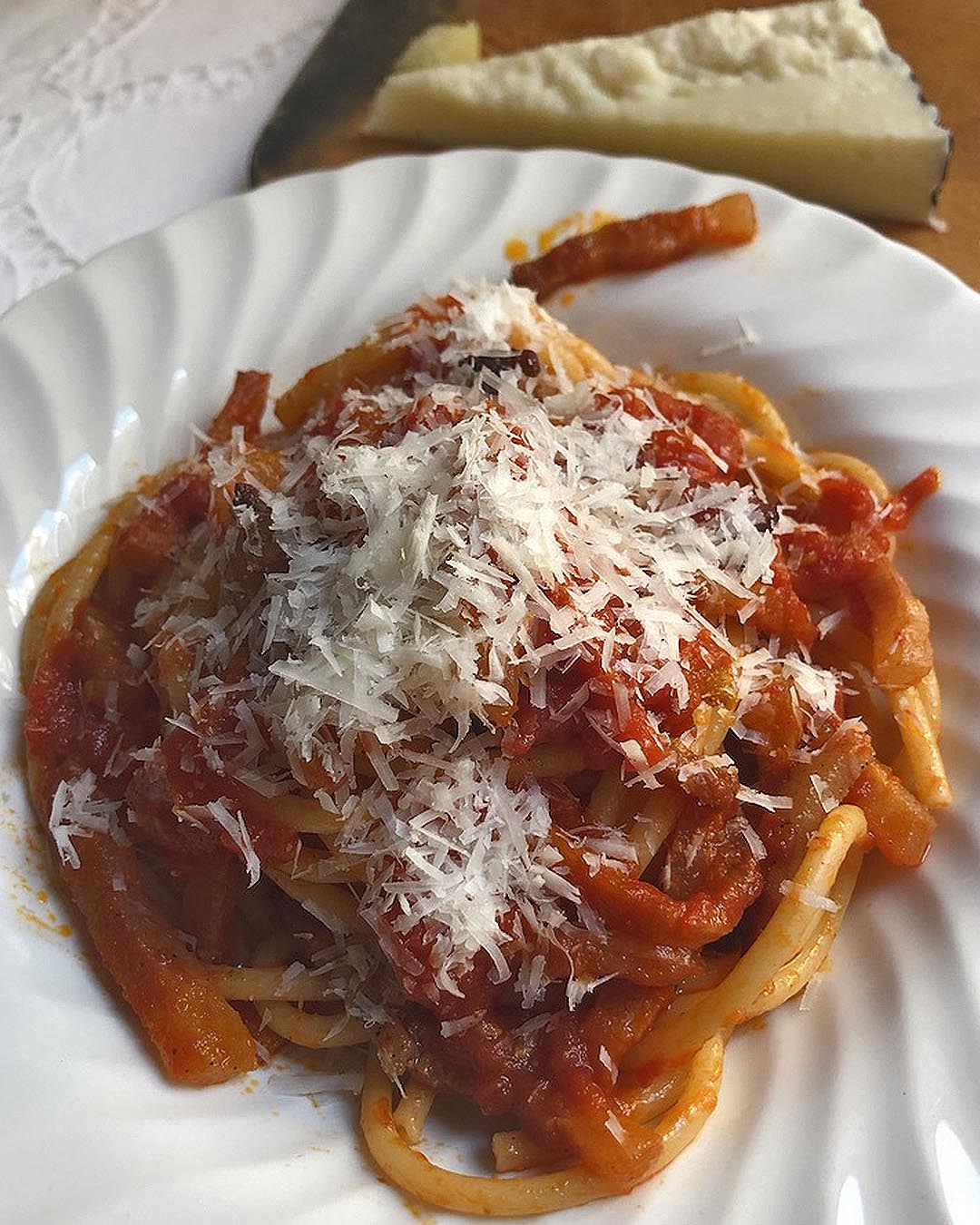
Bucatini Alla Amatriciana
 (No Ratings Yet)
 Loading...
Bucatini alla Amatriciana: a classic of Italian cooking and one of the most popular pasta here in Rome. The name comes from Amatrice, a beautiful city near Rome famous for pig breeding, where this recipe was invented. The "guanciale" (pork cheek) is in fact the main ingredient of this sauce, which is very simple. Every Roman has his own recipe but everyone agrees that the Amatriciana must be rich, succulent, sexy. If you have line problems this dish is not for you
Ingredients
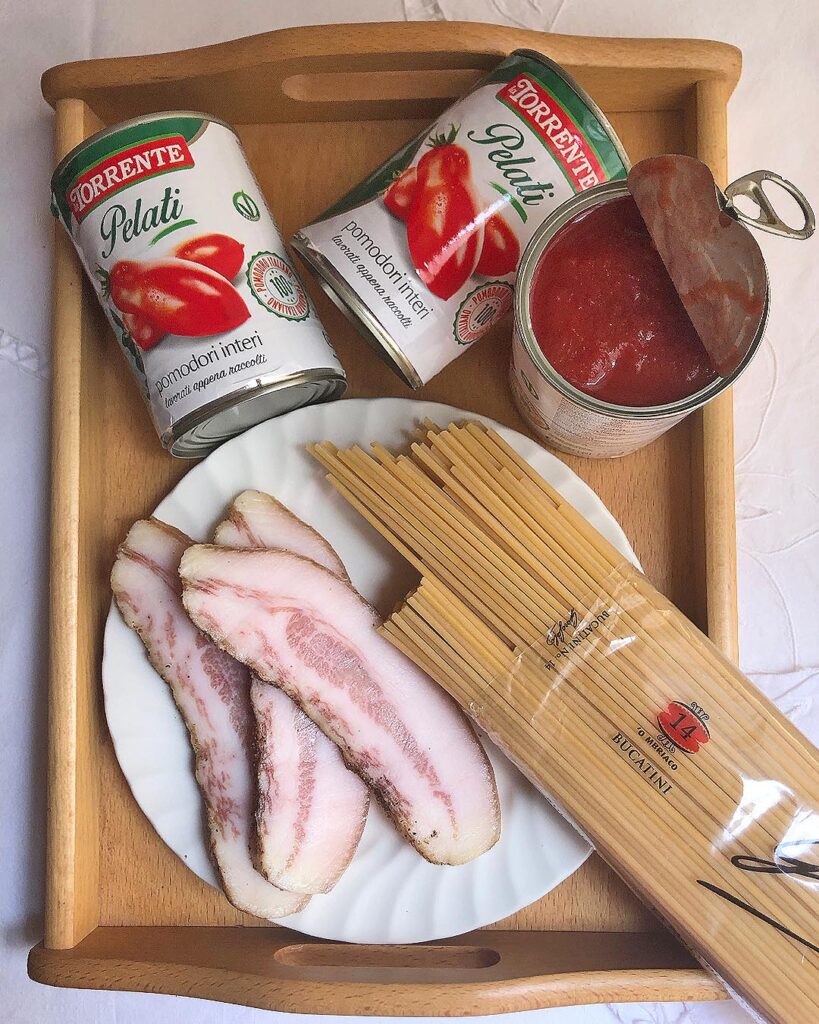
- "Bucatini" Pasta - 400gr
- Pork "Guanciale" 500gr - about 2 slices for each person eating
- Tomatoes "Pelati" 400gr - 1 can
- White Wine - 1/2 glass
- Pecorino cheese - 100gr
Instructions
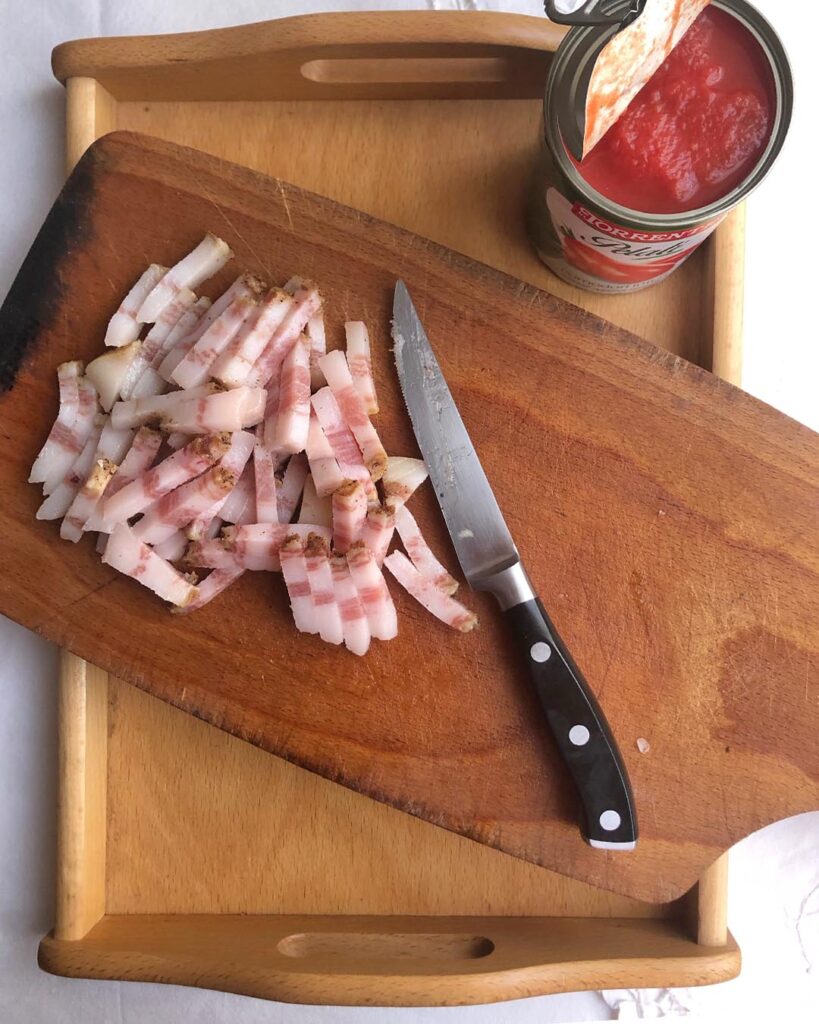
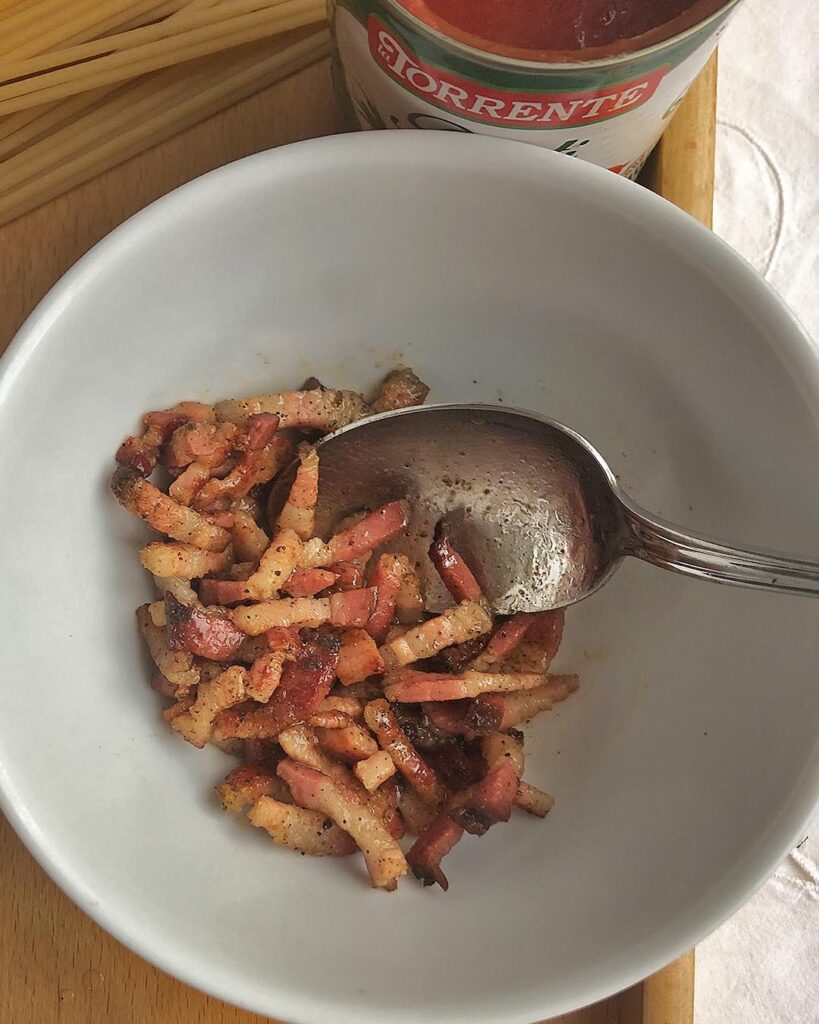
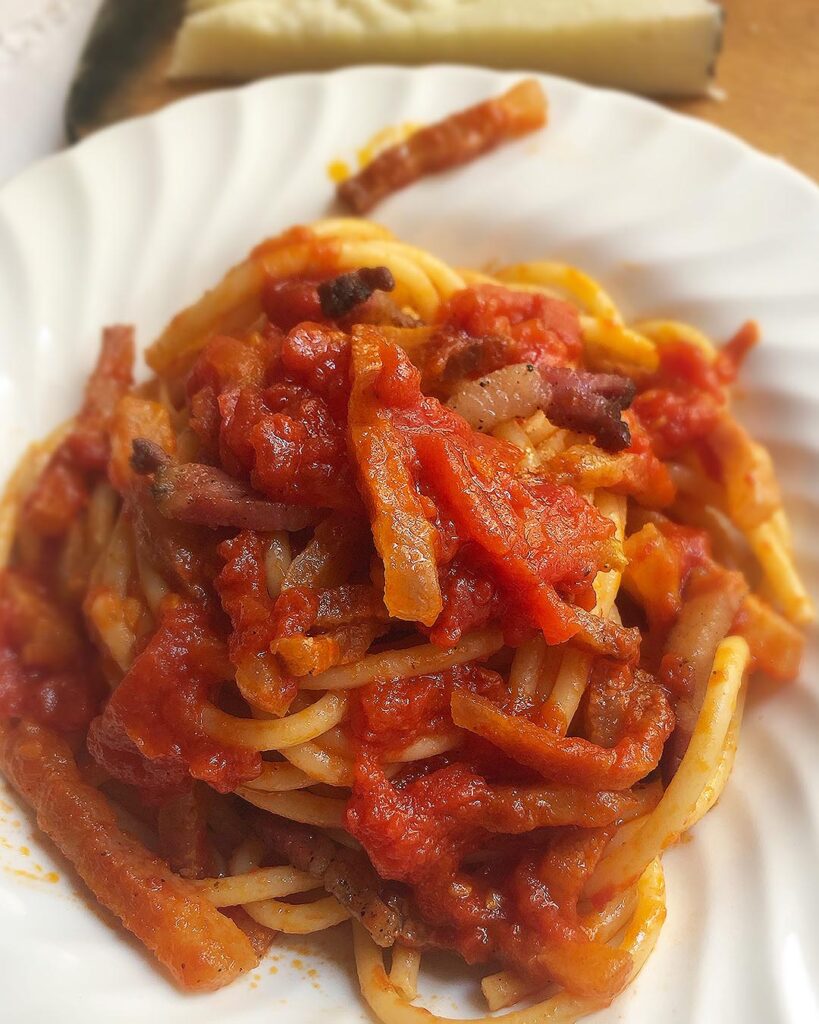
Do everything to find an excellent Italian "Guanciale": the cheek of the pig which is as fat as it is tasty. Looking at the photos you will see real slices of fat with a little pink meat in the center. Have your butcher cut the bacon into slices 1/2 centimeter high which you will then cut, in turn, into sticks
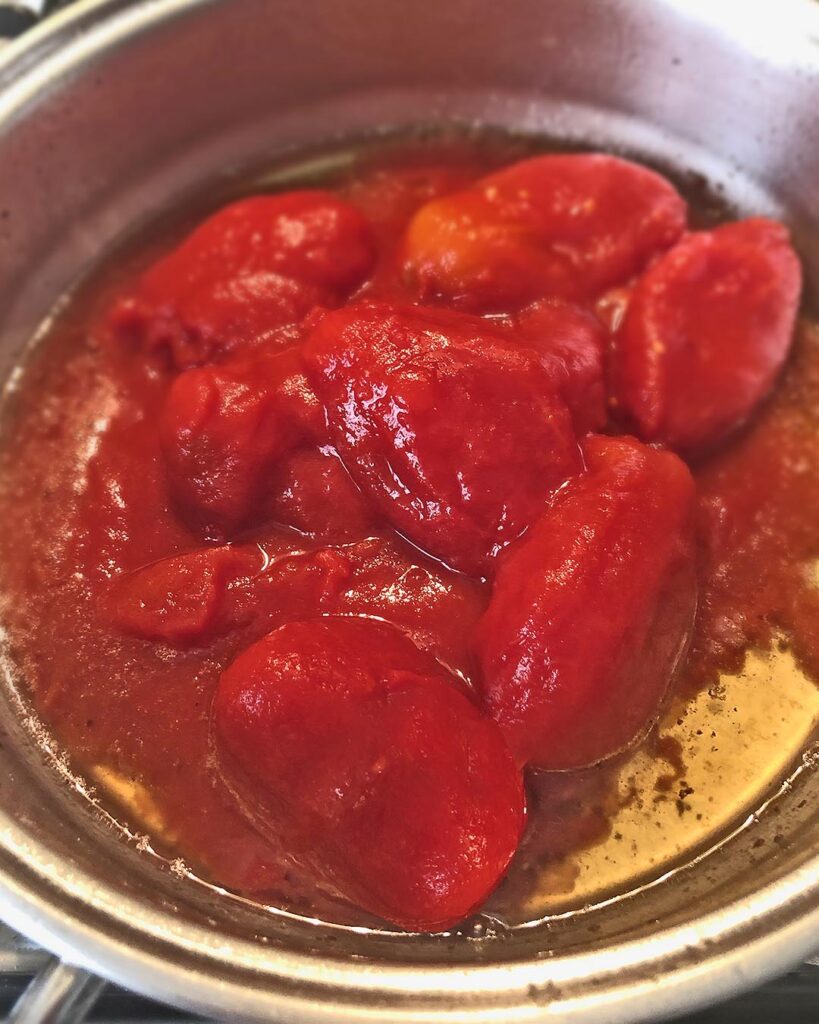
I use “Peeled” tomatoes, the classic S. Marzano tomatoes, long and pulpy that are lightly boiled and peeled (pelati) before being stored in the cans we find at the supermarket. They are perfect for this recipe because during cooking they fall apart in the sauce but remain firm and succulent. Avoid using the “Tomato puree” which would make the sauce too creamy and liquid.
The cooking method is as simple as it is brilliant: first we cook the pork and then, separately, we cook the tomatoes. The two cooking takes place in the same pan so that the pork fat becomes the condiment for the tomatoes. In fact, this recipe does not include oil or butter.
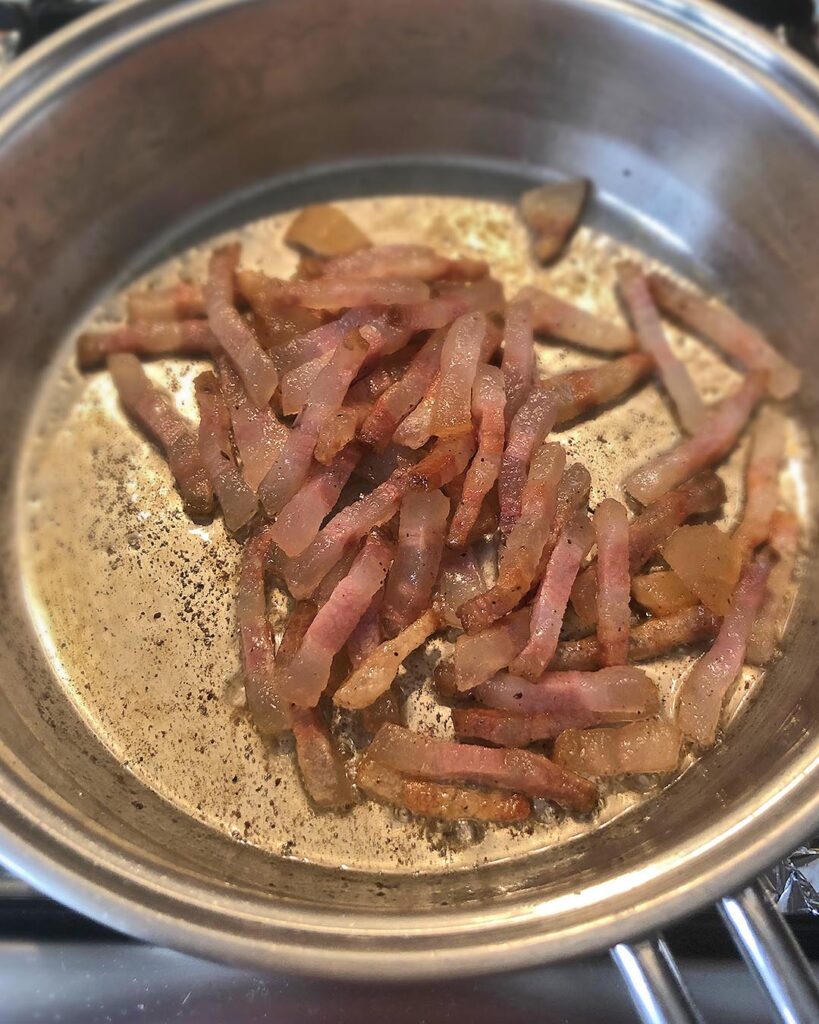
Let's proceed: first put the pork sticks in a pan and let them go over low heat without oil (they are already fat enough) for about 10 minutes, they must be crunchy but not overcooked or burned. Add half a glass of wine (which will make a little smoke) and let it evaporate. You will see that the pork has released much of the fat that has turned into the transparent liquid that covers the bottom of the pan
Remove the pork sticks (keep them warm in a bowl) and dip the tomatoes in the pan, so that they cook in the pork fat absorbing all the flavor
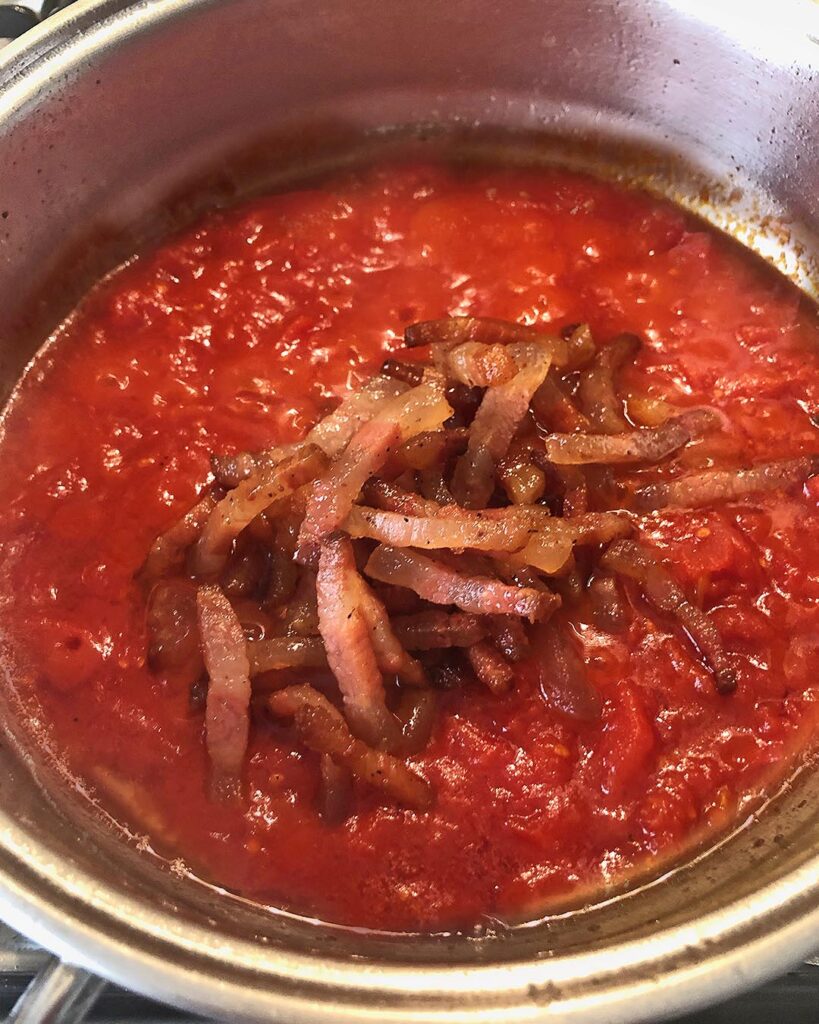
Boil the water, cook the pasta and check the cooking. When it is almost ready, put the pork sticks back into the sauce and leave to flavor for another minute. I drain the pasta by transferring it directly into the sauce pan (I don't use the colander), so as to collect all the sauce that will perfectly wrap the bucatini
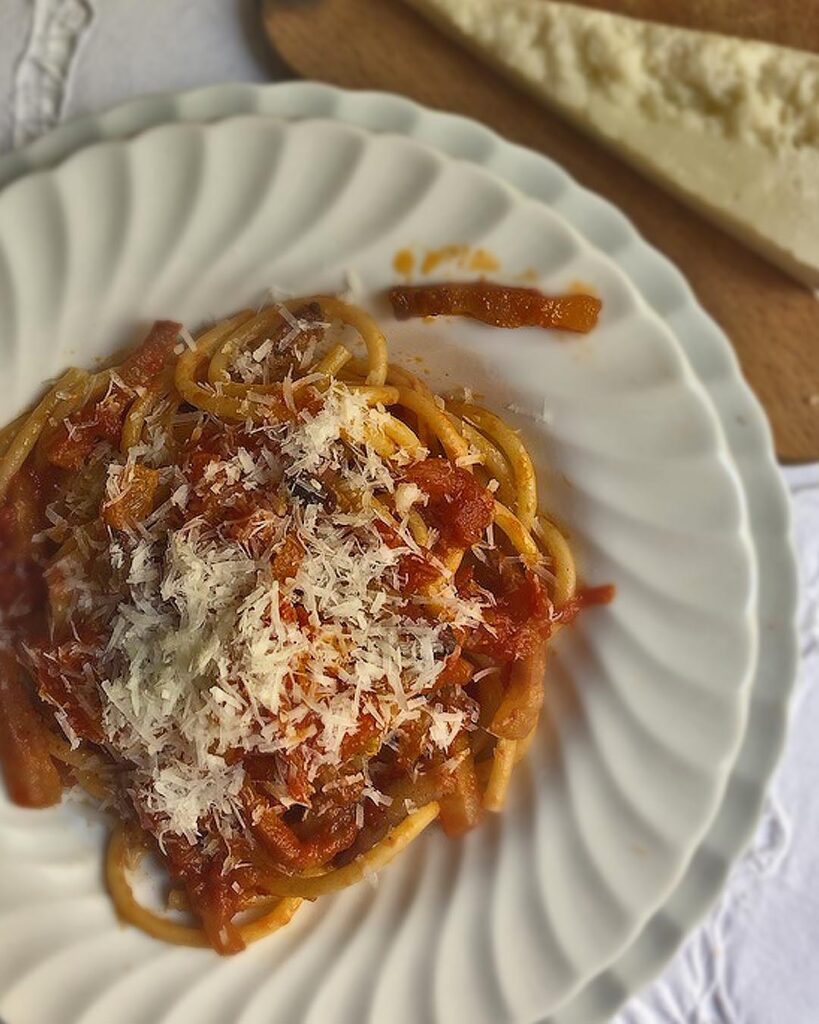
Transfer to plates and complete with plenty of grated pecorino cheese instantly
Notes
Bucatini alla Amatriciana: the tradition of Italian cooking relives in our dishes. This recipe is really as good as it is simple to prepare, although it requires some precautions and great attention to cooking: a little carelessness is enough to make your Amatriciana sauce First, pay close attention to the ingredients, which must be really good. If you do not find the “Guanciale” (pork cheek), you can replace it with the “Pancetta”, you will get a lighter but also less tasty sauce because the bacon is less fat than the bacon. I also recommend that you use excellent Italian “peeled” tomatoes There is only one secret: to balance these ingredients by perfectly combining the freshness and acidity of tomatoes with the sweetness of pork. To obtain this result you must pay great attention not to overcook the pork, which must be crunchy but soft, or the sauce, so as not to take away the flavor from the tomatoes
ItalianCookingTips
In Bucatini alla Amatriciana, the most common mistake is overcooking the ingredients. The tomato, above all, must be cooked the bare minimum so that it maintains the fresh and acidic notes that create a perfect contrast with the sweet fatness of the pork
ItalianCookingTips
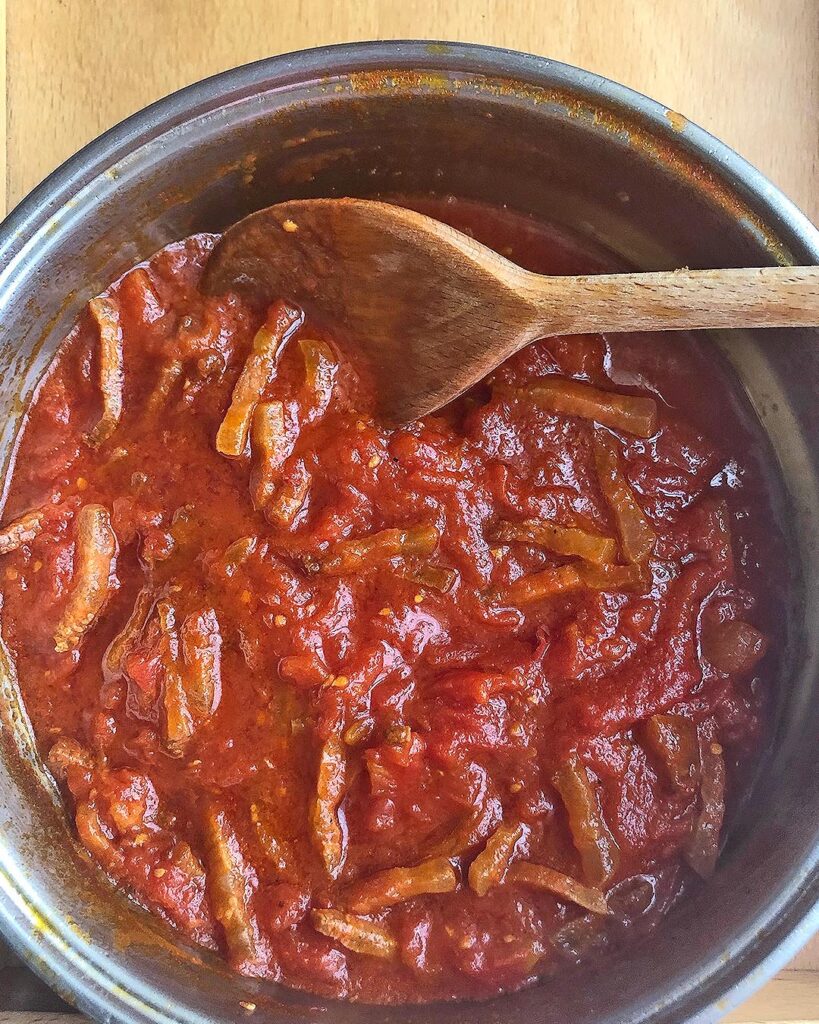
In Bucatini alla Amatriciana proportions are very important. The tomato must be in the right quantity so as not to cover the pork. The perfect Amatriciana is never “too” red, nor too juicy
ItalianCookingTips
“Bucatini” are spaghetti with a hole in the middle, very difficult to eat because they are difficult to roll up on a fork. They are a bit chewy and therefore they fit perfectly with this recipe. I also love spaghetti or, fantastic, penne


No Comments